Backpacking Part Two: Franz Josef Glacier
✒️ Written by: Abbie
The bus trip from Nelson to Franz Josef was about 9 hours long, and we were elated when we changed buses halfway in Greymouth to a much more comfortable one with seats that reclined. Quickly realising that the winding, hilly roads in remote New Zealand cause travel sickness rapidly, we gave up on reading our kindles or writing our blog posts and just sat staring out the window, enjoying the panoramic views and mountainous landscape.
It was early evening when we arrived in Franz Josef at our Haka House hostel. The village of Franz Josef is incredibly small, and we quickly realised there is just one menial supermarket, surrounded by lots of tourist accommodation and helicopter trip shops (which we did not frequent). Luckily, our hostel was brilliant—worlds better than the YHA in Nelson. We felt like we were living in luxury when we made it to our 6 bed dorm and found beautiful wooden bunk beds with curtains across the side, charging ports and compartments in the headboard, and storage cupboards for each bunk.
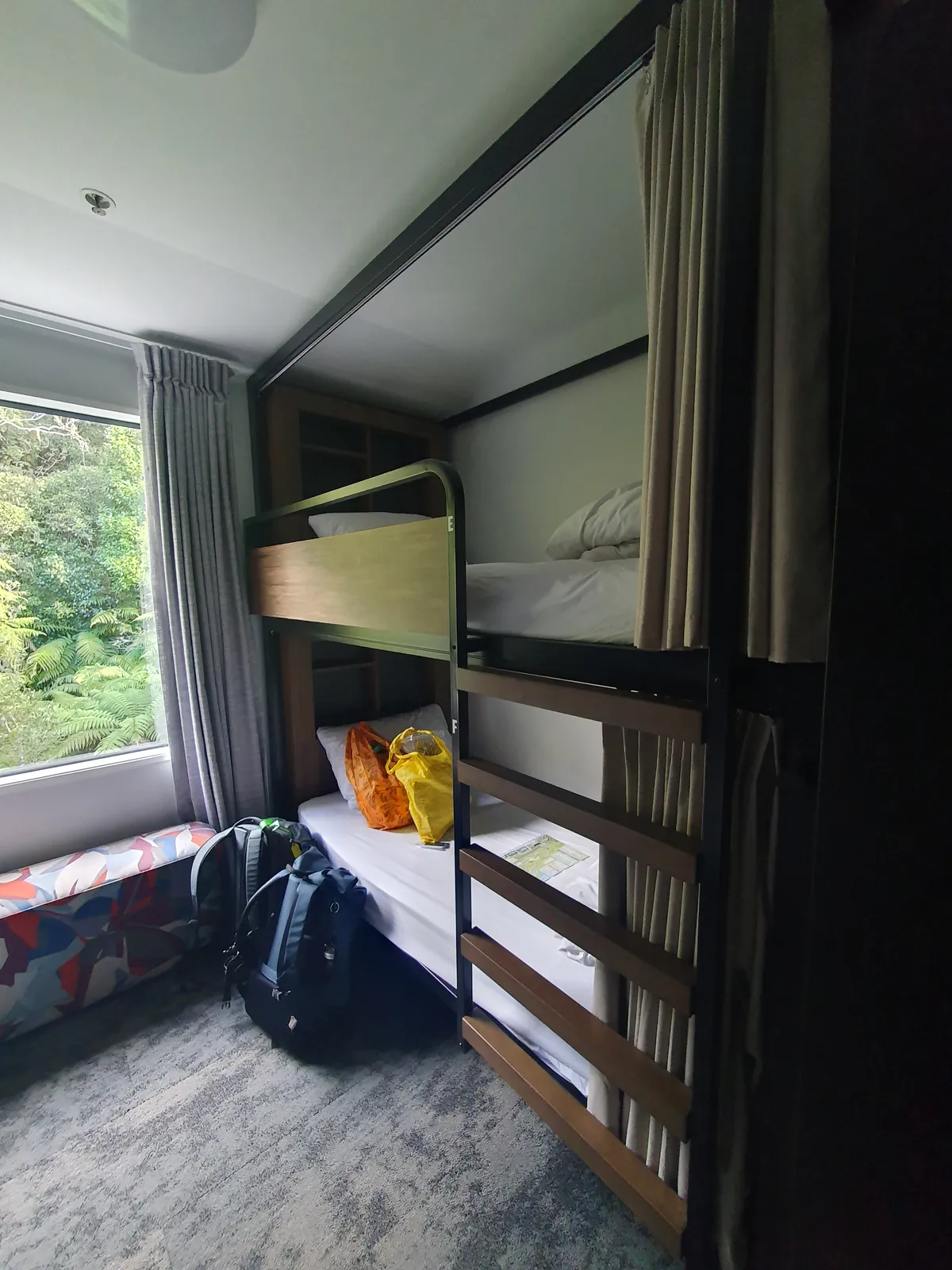
We got settled in then went downstairs to the decent kitchen to cook a meal. The hostel even had a movie room with bean bags, so we sat in there chilling out all evening, waiting for the sun to set so we could give astrophotography a try.
James gathered all his camera equipment and we got all wrapped up, layering on the mozzie spray, only to get outside and discover there were far too many clouds. We hung around for a while hoping the forecasted clear sky at midnight would become reality, meanwhile I tried searching for wild kiwis. Both ventures ended in disappointment—cloudy sky and no kiwis in sight. All was fine though, because the next day we would be feasting our eyes on an actual glacier.
It was a good night’s sleep in Haka House hostel, and we woke up early to get the first shuttle bus over to Franz Josef glacier. The bus driver was incredibly helpful, and recommended a few walking routes which would be perfect for us. We started with a short 15 min walk to the glacier viewpoint itself, which was the quickest and easiest walk of the day. For the first time in our lives we were the early birds, and made it to the viewpoint before the swarms of tourists who would litter the area for the rest of the day. The glacier revealed itself from the valley so suddenly it took us slightly aback—struggling to believe we were really in its presence.
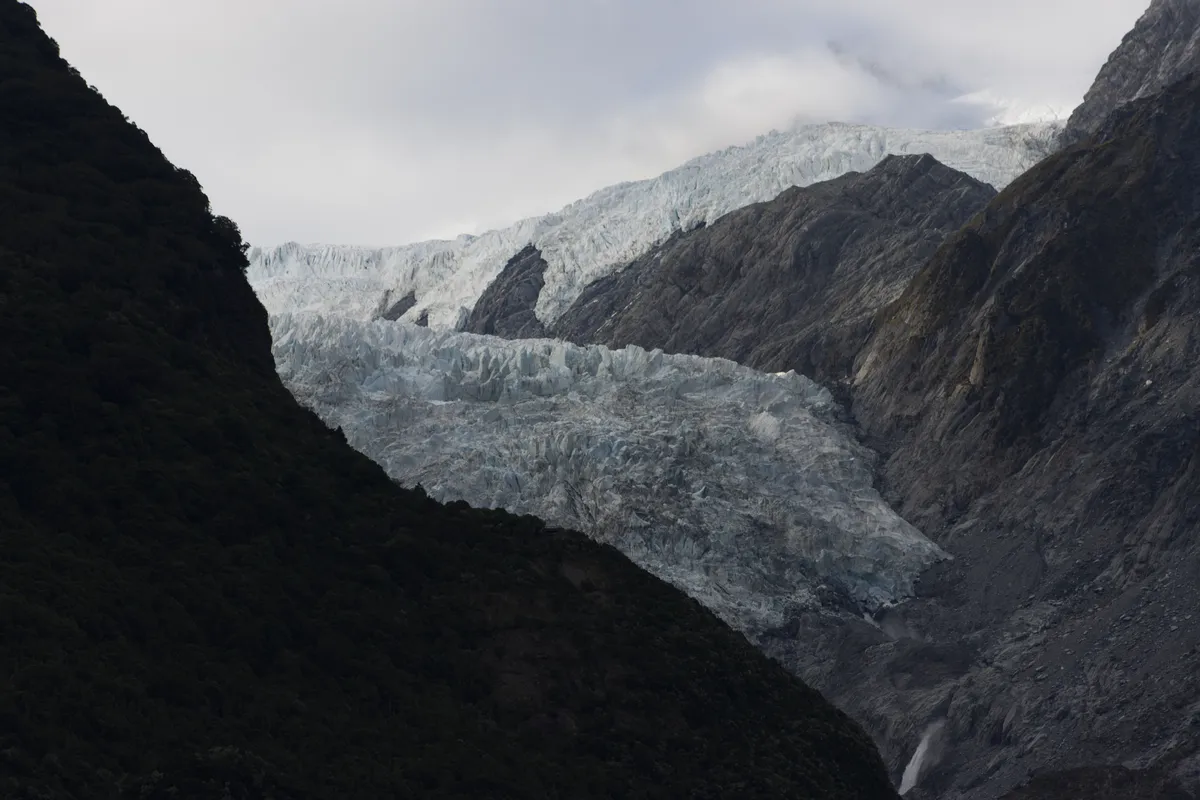
Sadly, Franz Josef glacier is a shell of what it once was. The world's glaciers are generally retreating and have been for years, but more so now because of global warming; those in New Zealand's Southern Alps are no different. The viewpoint we were standing on used to be underneath ice, and as we walked through the valley throughout the day we felt the weight of the gap left by the glacier as it has retreated since its peak in the early 18th century. Franz Josef glacier was first mapped in 1893, and since then has retreated over 3km!
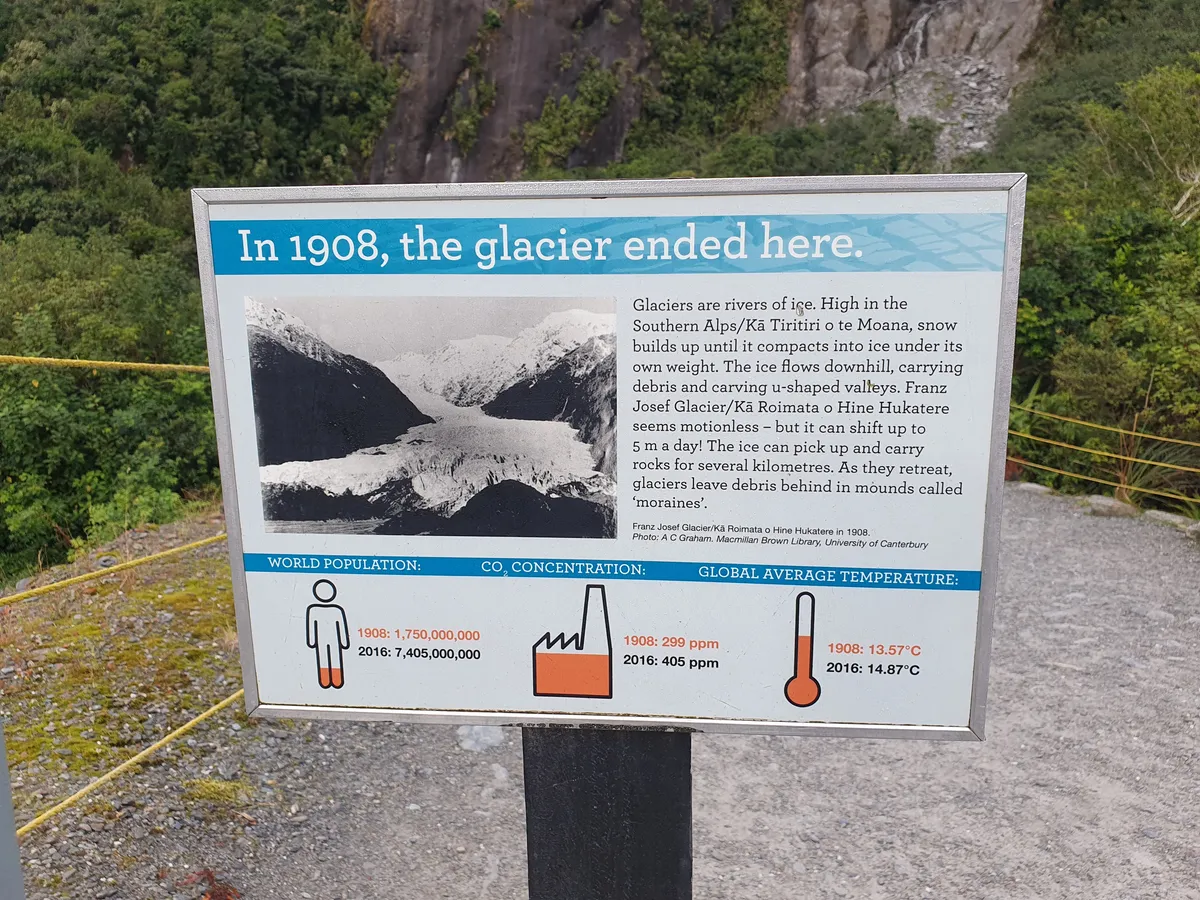
The glacier has been present in the lives of New Zealanders long before the islands were discovered by Europeans, though. The Maori name for the glacier is Kā Roimata o Hine Hukatere, which means The Tears of Hine Hukatere. The story behind this which has been orally passed down through generations of Maori is that Hine Hukatere loved to climb the mountains of the Southern Alps, but when she brought her less experienced lover along with her, he fell and died. Her tears filled the valley and froze to create the glacier.
We spent a while marvelling at the glacier, then made our way back towards the car park for some wandering around. Throughout the day, this was the route of our wanderings:
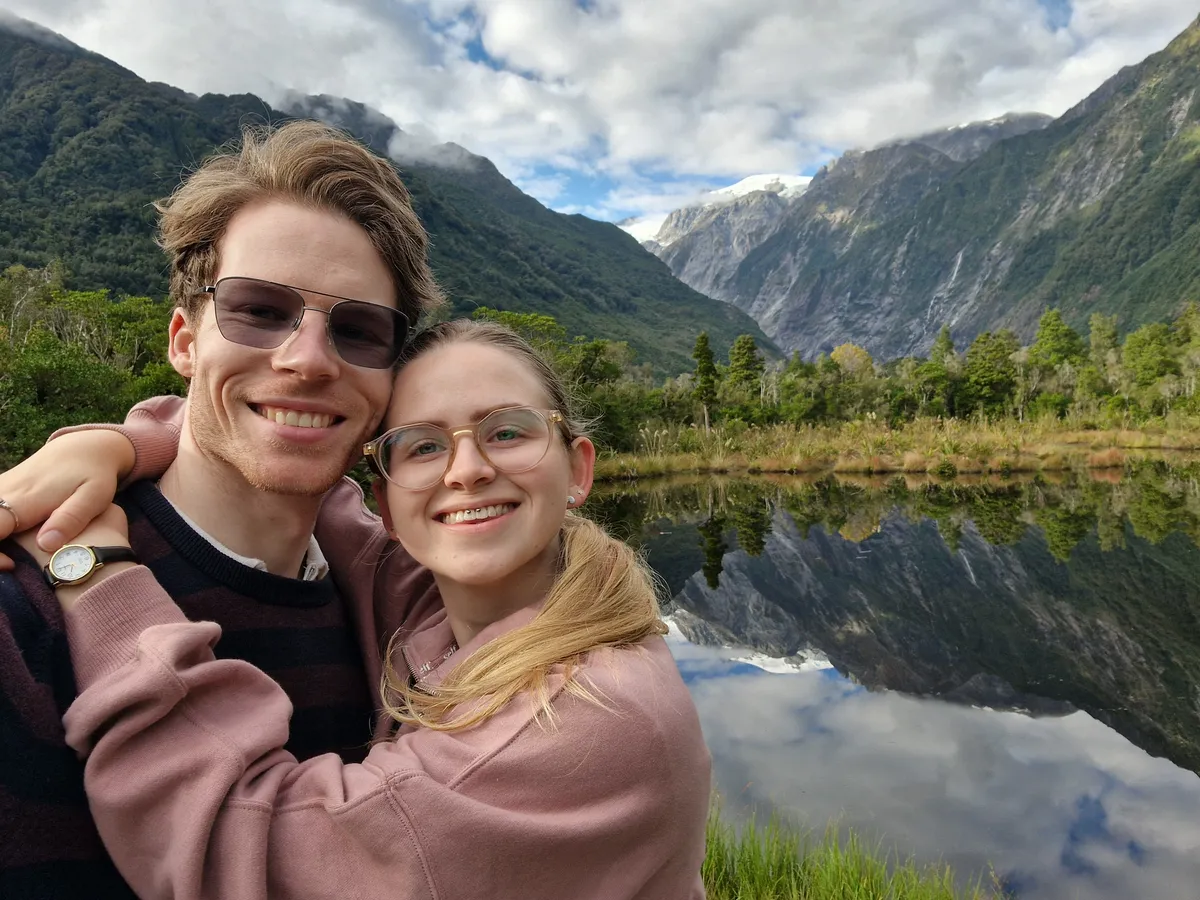
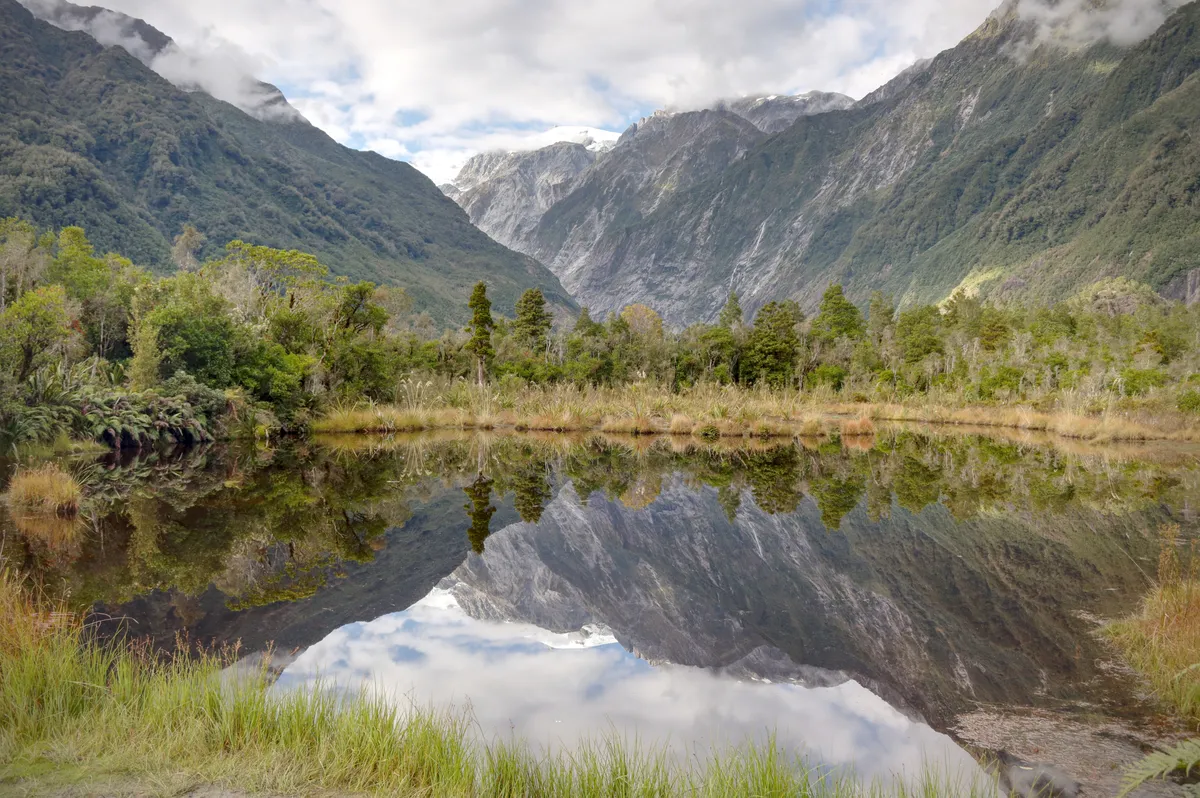
Our next mission was to reach Peters Pool, an incredibly reflective pond offering a mirror image of the valley beyond it. It was only a short walk through trees, until the path opens out onto the viewpoint. Again, we made the most of being early birds and enjoyed it without too many other tourists blocking the view. It was a perfectly still day, meaning the reflection in the pool was perfect.
After that, we kept on the track and made our way towards the Waiho River which drips glacier ice in rivulets along the valley floor where the glacier once stood. We made it to the swing bridge, which marks the start of Roberts Point Track—an epic 12km walk to a brilliant glacier viewpoint. We were NOT intending on walking this track after doing some research and finding out it takes over 5 hours, is incredibly dangerous, can only be attempted in good weather, should only be attempted by those who are fit enough, and requires serious hiking and tramping experience. But we love a swing bridge, so decided to cross to the other side just for that experience alone.
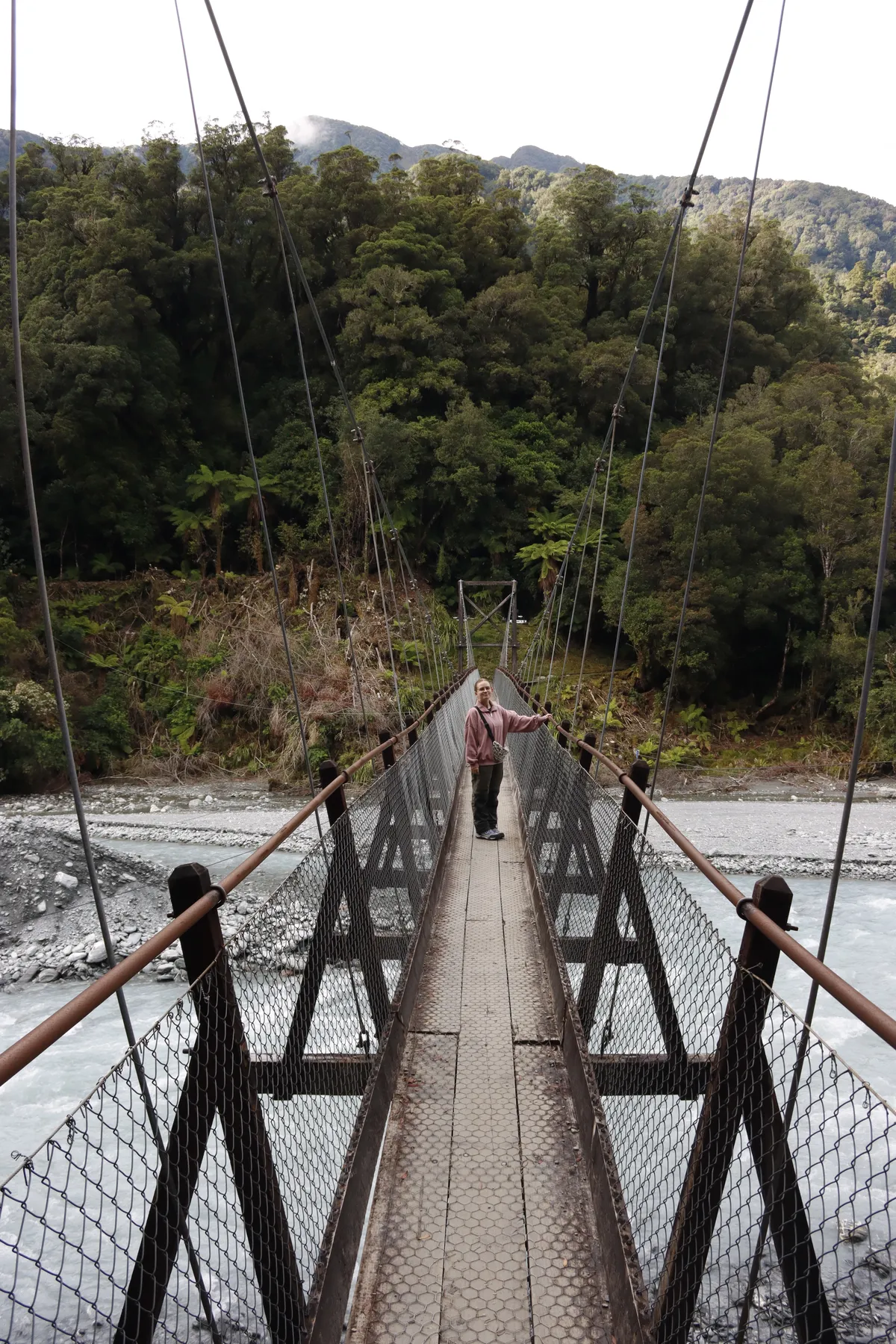
On the other side, we figured there's no harm in attempting the life threatening track, because we can just turn round and go back once it starts to get difficult. And so, we passed the warning signs giving detailed information about the three cases of people dying on the track, and decided to give it a whirl.
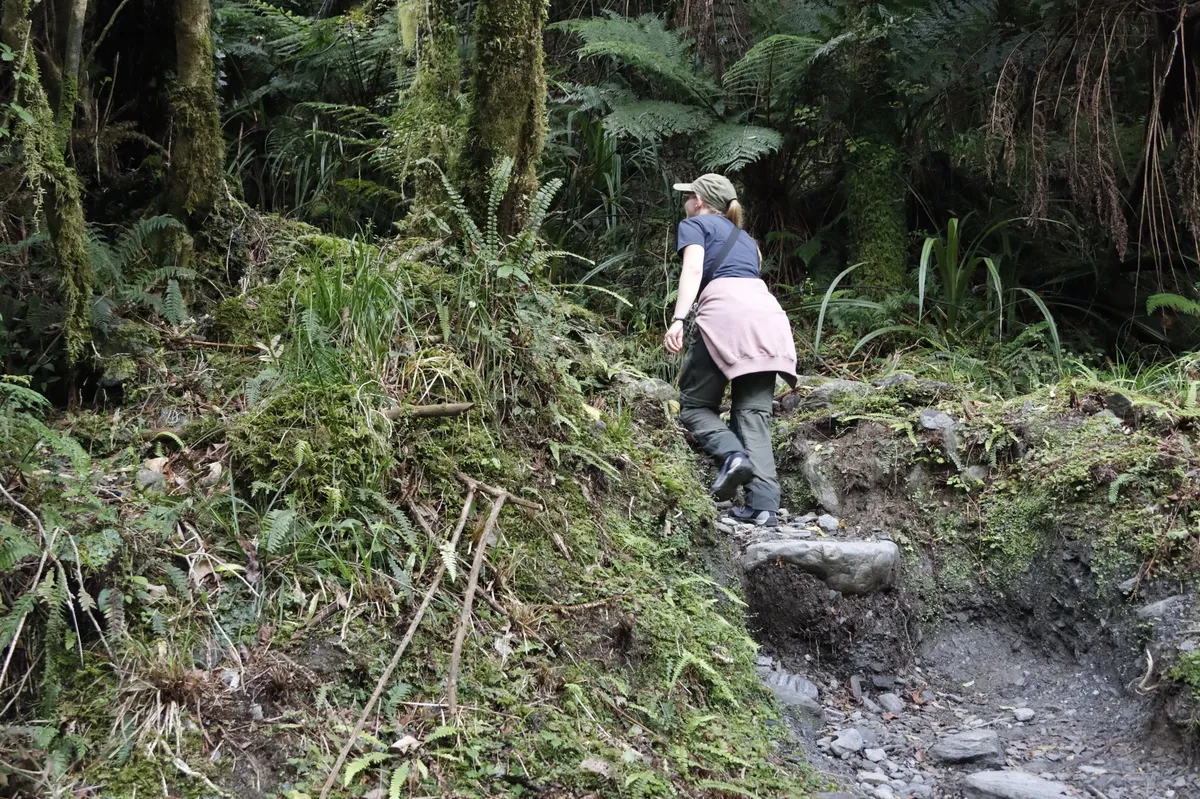
The route started out easy enough, then got gradually more scramble-y. We carefully followed the arrows nailed into tree trunks whenever the onward path became less obvious. The route took us sideways along the valley raised above the river below, up and down dips in the mountains which towered above us, leading us towards the now-hidden glacier. Boulders flanked the walkway and at one point we crossed a downward flowing stream and tiptoed over the large stepping stones.
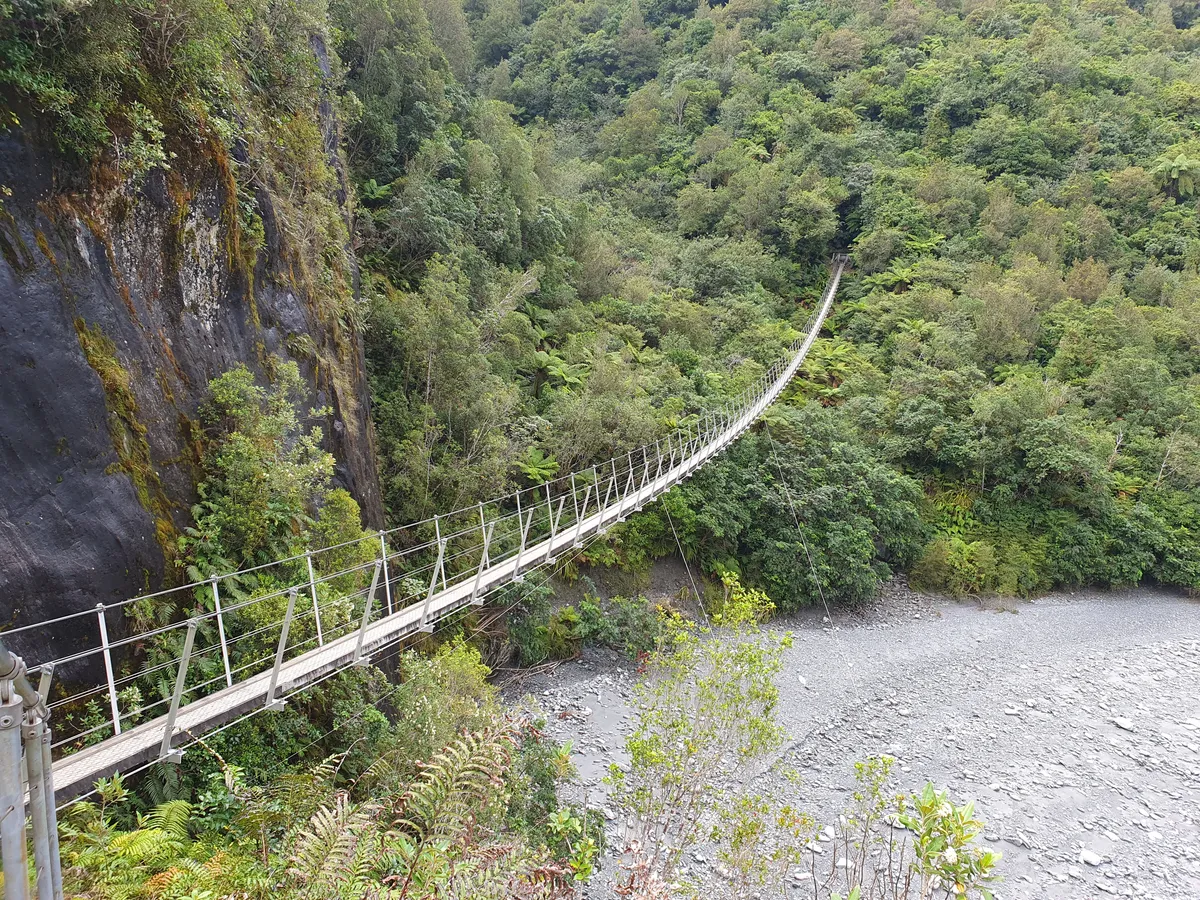
We kept pushing on every time we felt we were struggling. Soon, it became apparent that maybe we did want to tackle the whole Roberts Point Track after all. We had enough time for it, having caught the first shuttle bus of the day. But did we have the stamina, fitness, ability? Probably not. We were boiling hot, James having not packed strategically for this backpacking trip and wearing a rather thick jumper-like t-shirt. We sweated, huffed, and puffed across more precarious rope bridges and even had to climb up some rocks at one stage. And when I say rope bridges, I mean serious rope bridges including a super long, wobbly, high-up one which nearly had me turning round and running home.
The other problem was our backpack: instead of having a lightweight day bag for hiking, we simply used one of our two backpacks made only slightly lighter than usual by only packing the essentials. The bag in itself was still really heavy and one of us always had to bear the load alone, unable to split it into two. The blame for the weight was mainly down to James's camera and its equipment, so James took the bag for the most part until his back started hurting. Looking back now, we were clearly never going to champion this walk and were leading ourselves into a dangerous trap.
Nevertheless, we were making decent progress (so we thought) and the walk in itself wasn't too bad, we just weren't prepared with the correct clothing and luggage. We trudged on, hopeful we had a chance of beating this challenge and reaching the end point: a stunning, close up view of the glacier.
Spoiler alert... We did not make it there.
It all came to a head when we reached a sign that pretty much said:
'If you are struggling, turn back now. It gets harder, steeper, with more risk of falling. The steepest, most difficult parts are all ahead. The remainder of the track will take longer than what you've already done.'
Crap, we thought (and said aloud).
This sign was just outside the famous Hende's Hut, built with much difficulty in the early 1900s for shelter during glacier expeditions. We sat outside it for a while deliberating whether or not we should carry on. We ate our lunch partly out of hunger, partly to see if it would make our bag any lighter. We genuinely, seriously, debated leaving the bag and all its contents hidden in Hende's Hut so we could complete the walk without the heavy burden, but not only did it risk the backpack getting stolen, but it also risked us taking on an incredibly demanding hike with literally no belongings to use in an emergency.
One minute we decided to turn back, the next minute we decided to keep going. We couldn't make up our minds. Deep down, we knew we absolutely should not risk something so dangerous, but the thirst for success was strong. We didn't want to fail, especially because we'd already come so far. Countless brave, fit, well prepared people walked past us like the next section was no worry at all. We reluctantly shuffled things around in the bag and offloaded James's camera equipment onto his person so I could carry the backpack, and edged towards the cliff face where the path continued round the corner, ready to give it a shot.
Before us laid a sudden drop disguised behind a ladder built from wooden slats fixed into the cliff face, with a skimpy barrier on the drop side. It skirted steeply down the side of the mountain towards a hidden wilderness inside the beckoning trees, where we knew for certain the path would continue upwards in a likely similar incline.
See this photo on Reddit to get an idea of the horror.
I took one look at those aged pieces of wood descending one by one down the ragged rock and said 'nope'...
And that was that. We were turning back. Nothing was going to make me climb down that staircase of doom. We admitted defeat and walked back the way we came, which was still a difficult walk. The whole way, we reiterated to each other the multitude of reasons why it was right to turn round and give up; justifying our failure to make ourselves feel better.
It took over an hour to get back to the start of Roberts Point Track, then more hiking afterwards to find our way back in a loop to the car park. Honestly, at this point we were exhausted and just wanted to get back to the Haka House hostel. By then, we truly recognised that the full 6 hour track to Roberts Point glacier lookout was not for us. We added it to the ever-growing list of things to do next time we're in NZ (when we pack appropriate clothing and backpacks).
We arrived back at the car park with a while to wait for the next shuttle bus, so James managed to drag me up a steep-but-short hill to another glacier lookout for one last look at the glacier before we headed back to Franz Josef village.
Our bus driver greeted us with 'you survived!' which, honestly, we felt was a real accomplishment.
Later that evening—after a nap and another hostel cooking sesh—we made our way through the small village of Franz Josef for a late-night visit to Waiho Hot Tubs. Despite being nestled amongst the small quantity of other shops and businesses, the hot tubs take you away into a serene forest experience. The friendly member of staff welcomed us and gave us all the information we need, before guiding us down a winding wooden-slatted path surrounded by greenery to our hot tub. Enclosed within rustic fence and dense bush, our hot tub was private for just the two of us. We could hear other parties nearby in their own tubs, but they were entirely non-visible to us. We even had a little hut to get dressed and hang towels and clothes.
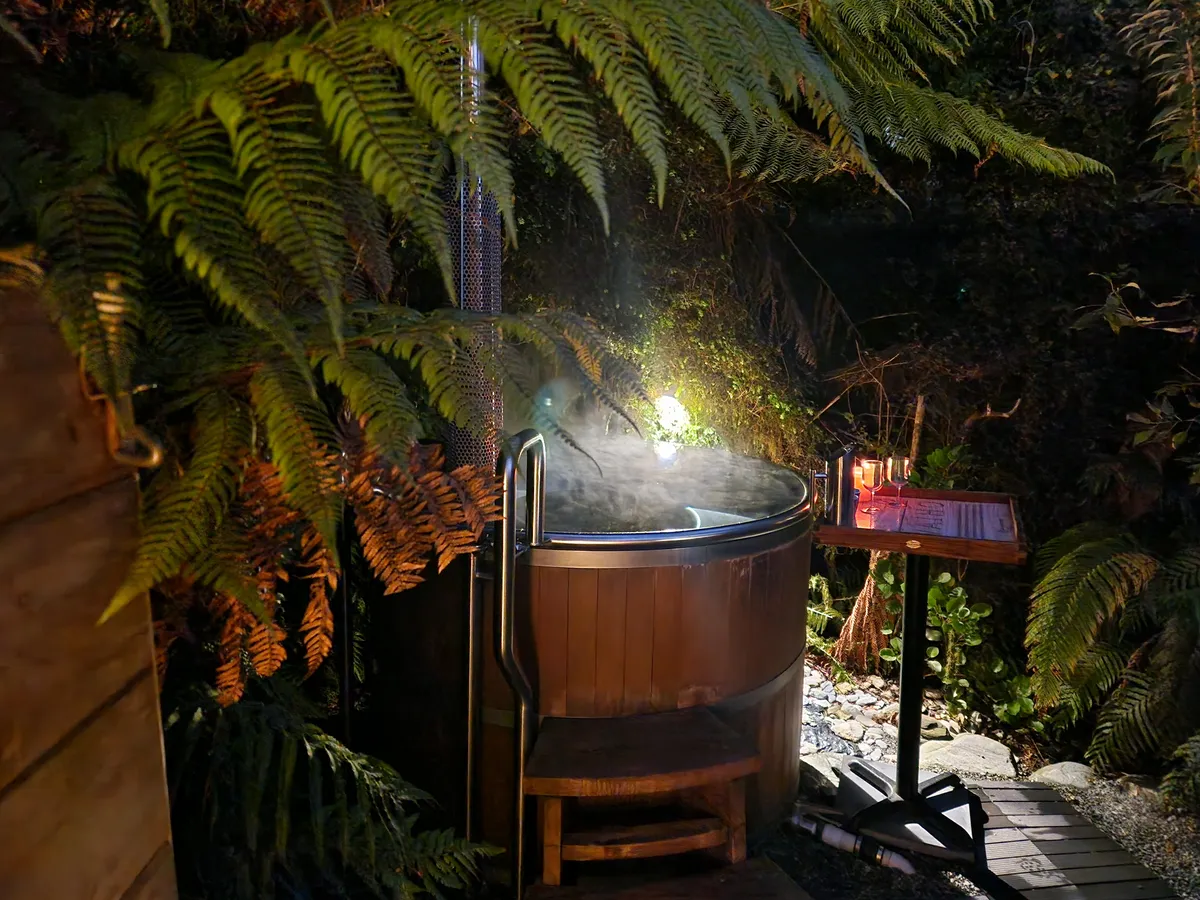
The hot tub itself was wood-fired and cylindrical, with plenty of space for us both. It was the perfect hot temperature of 40°C and had a tap of ice cold water at the side should we get too warm. Full to the brim, it overflowed across the forest floor and wooden decking as we clambered inside. A side table contained a lit candle, a jug of cold water and glasses, and we added to it with the wine and chocolate we brought along.
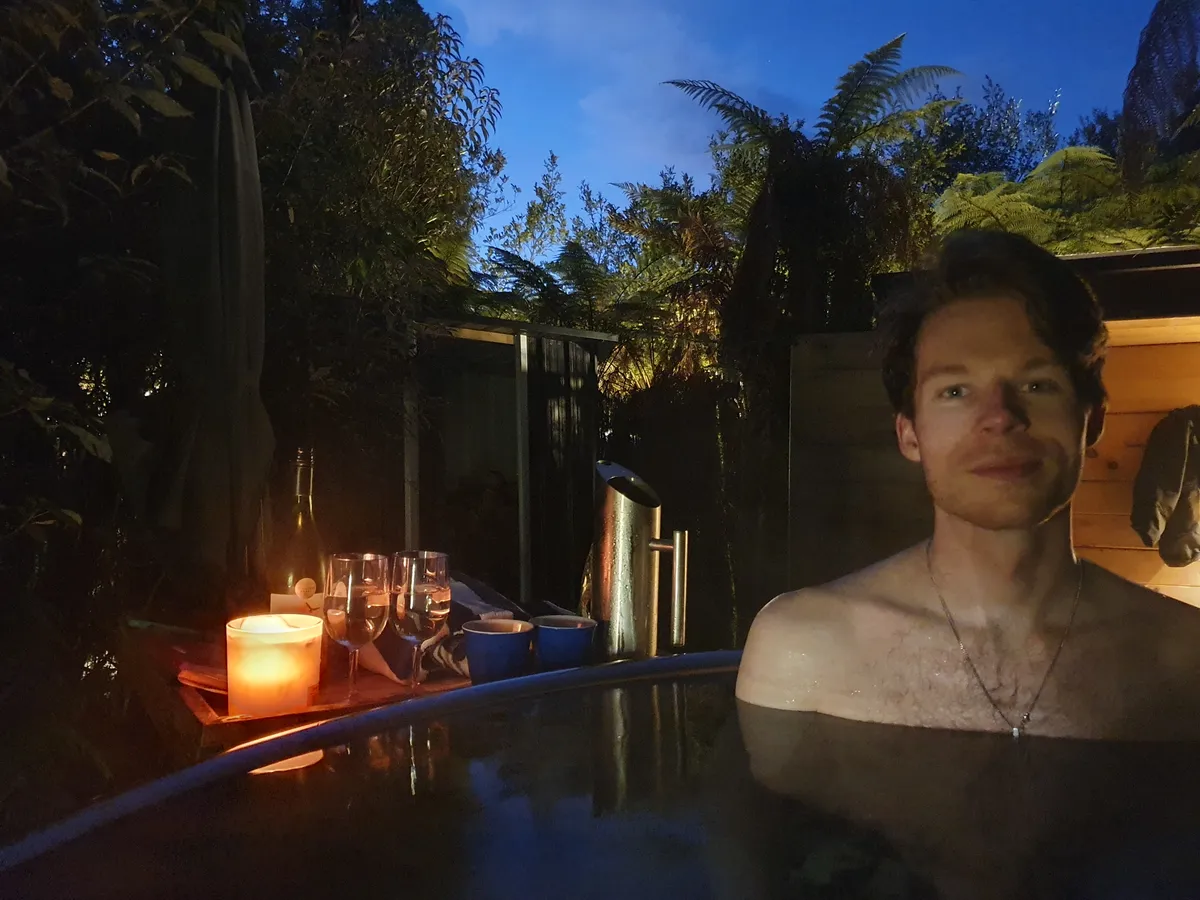
This was without a doubt the perfect activity after a long day of hiking and risking our lives on the Roberts Point Track. The hot water soothed our aching muscles and reminded us that relaxing is just as important as adventuring. We drank our wine and enjoyed our Whittaker's chocolate bar (the BEST chocolate in NZ), looking up at the stars, feeling the novelty of bathing in the forest, and talking all about our quest that day.
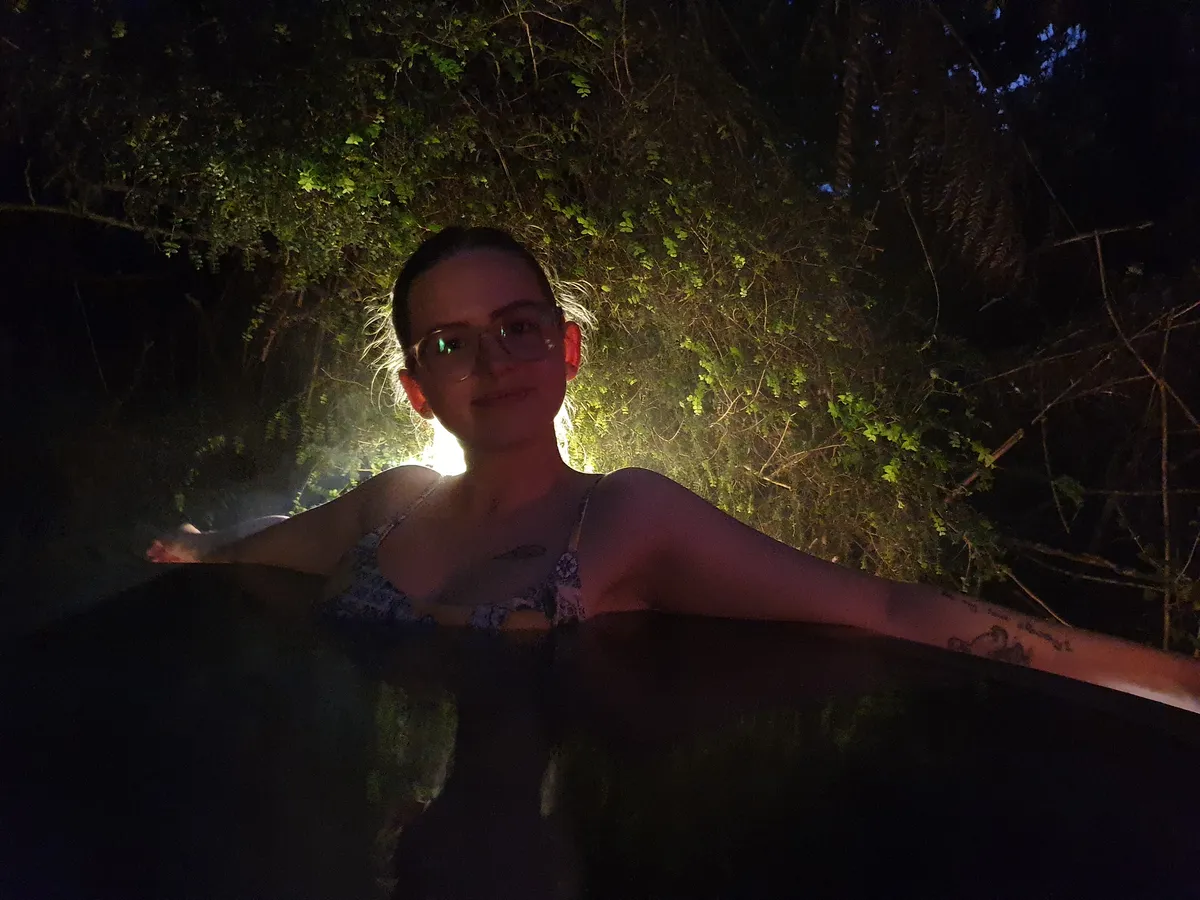
We had a full hour in the hot tub until it started to drain on its own, at which point we reluctantly stepped out and got showered on site. This experience made our time in Franz Josef that extra bit exciting and it was the ideal evening to finish off our short stay in the glacier's village. We went back to the hostel and packed our bags once again for another long bus journey the next day.
Next stop: Queenstown, the adventure capital of the world